

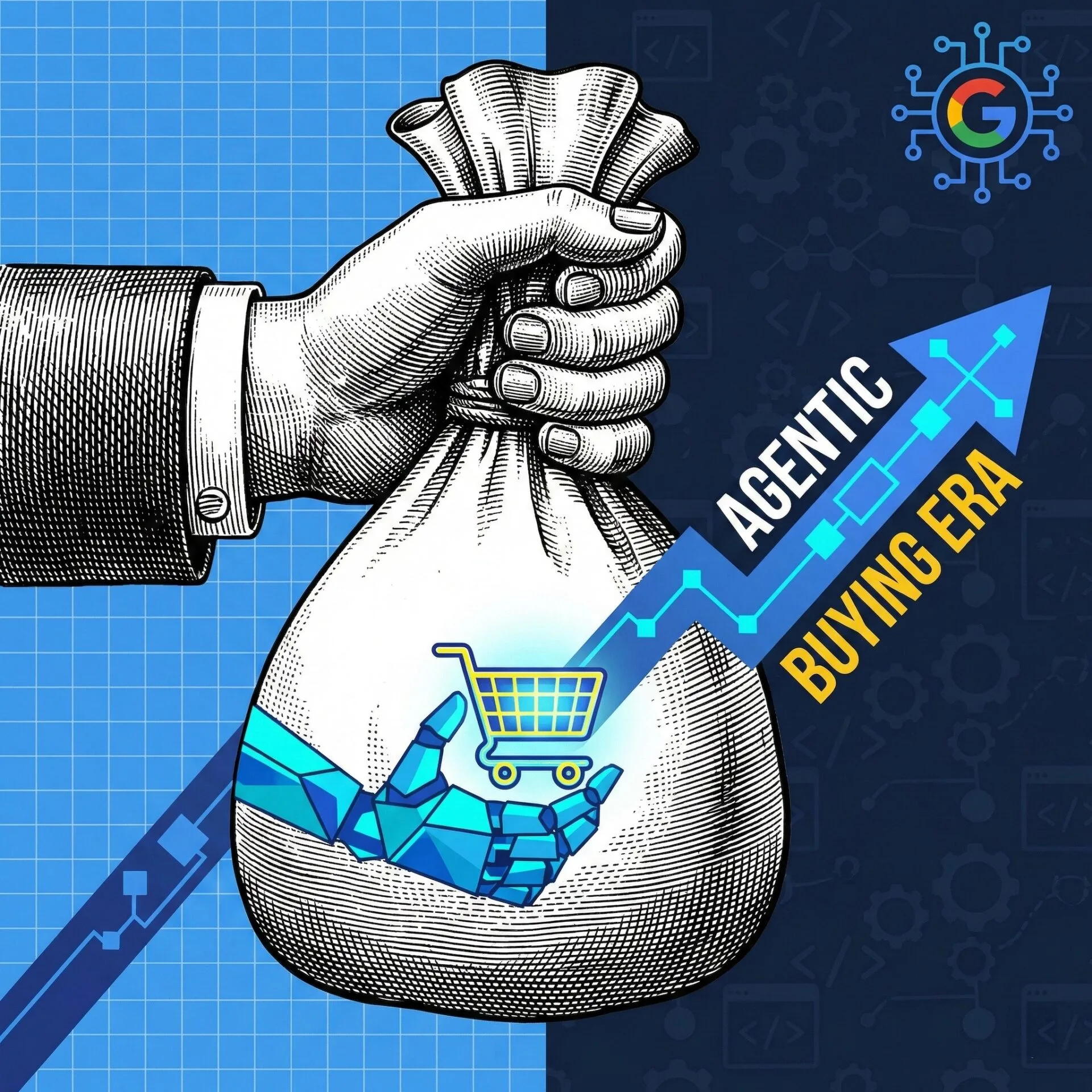
We are witnessing a historic shift in e-commerce. For two decades, the goal was to drive traffic to a website. Now, the goal is to bring the checkout to the user—or rather, to the user’s AI agent.
Google has officially unveiled the Universal Commerce Protocol (UCP), an open standard designed to turn AI interactions into instant sales. This capability allows AI agents on surfaces like Gemini and Google AI Mode to not just find products, but to buy them autonomously.
For growth leaders, this is the signal to evolve. Here is your strategic briefing on UCP and how to prepare your business for the age of agentic commerce.
Table of Contents
What Is the Universal Commerce Protocol (UCP)?
The Universal Commerce Protocol (UCP) is an open standard that enables direct, instant transactions across AI surfaces.
Instead of forcing a user to click a link, visit a site, add to cart, and checkout, UCP allows the transaction to happen directly within the conversation. It unifies digital commerce by standardizing how agents interact with your inventory.
By adopting UCP, you enable “agentic actions.” This means an AI model (like Gemini) can securely handle the discovery, comparison, and purchasing process for the user, drastically reducing cart abandonment and friction.
Why This Matters for Your Growth Strategy
Many brands worry that AI surfaces will steal their relationship with the customer. Texas-based tech giants have historically walled off data. Google’s UCP takes a different approach that is critical for your data strategy.
1. You Keep the Customer Data
This is the most critical feature: You remain the Merchant of Record. Even if the transaction happens on an AI surface, you own the customer relationship, the transaction data, and the post-purchase experience.
2. Access to High-Intent Shoppers
UCP unlocks access to users at the exact moment of discovery on surfaces like AI Mode in Search and Gemini Web. These are high-intent moments where reducing steps to checkout can significantly boost conversion.
3. Future-Proofing for “Agentic” Experiences
The protocol is built for the future. It supports multi-item carts and account linking (coming soon), meaning loyal customers could eventually say “Refill my usual order” to their AI, and the transaction is done instantly.
How to Integrate: Native vs. Embedded
To capitalize on this, you need to choose an integration path. This is a conversation you must have with your technical lead immediately.
Native Checkout: This integrates the checkout logic directly into Google AI Mode and Gemini. We recommend this for most growth-focused brands because it minimizes friction and unlocks the full potential of agentic buying.
Embedded Checkout: An optional path for merchants with highly complex branding or checkout flows. It allows you to use an iframe-based solution, but it may add a layer of friction compared to the native flow.
3 Steps to Get Ready Today
You cannot afford to wait until your competitors are live on Gemini.
Audit Your Merchant Center: Use your existing Shopping feeds as the foundation. Ensure your data is pristine, as agents rely on structured data to verify availability and price.
Align Your Tech Stack: UCP is interoperable with major standards like the Agent Payments Protocol (AP2) and Model Context Protocol (MCP). Ensure your development team is exploring the GitHub open-source interface.
Upgrade Your Team’s Skills: Understanding the mechanics of AI and data is no longer optional. It is a core competency for modern marketing.
The Bottom Line
The Universal Commerce Protocol is not just a feature update; it is the infrastructure for the next decade of digital trade. The winners will be those who make it easiest for AI agents to buy from them.
Ready to lead the AI revolution in your company?
Boost your team with Growth Tribe and connect with our experts to accelerate your AI journey.