Table of Contents
The artificial intelligence landscape is shifting rapidly, and waiting to adapt is no longer an option. By 2026, the European Union will fully enforce the world’s first comprehensive legal framework for artificial intelligence. If your business relies on automated tools, machine learning, or generative models, ignoring these new rules could lead to severe penalties and a loss of public trust. In this guide, you will learn the exact practical steps ambitious professionals and leaders must take to ensure their teams are fully compliant and future-proof.
What is the EU AI Act and why is it urgent?
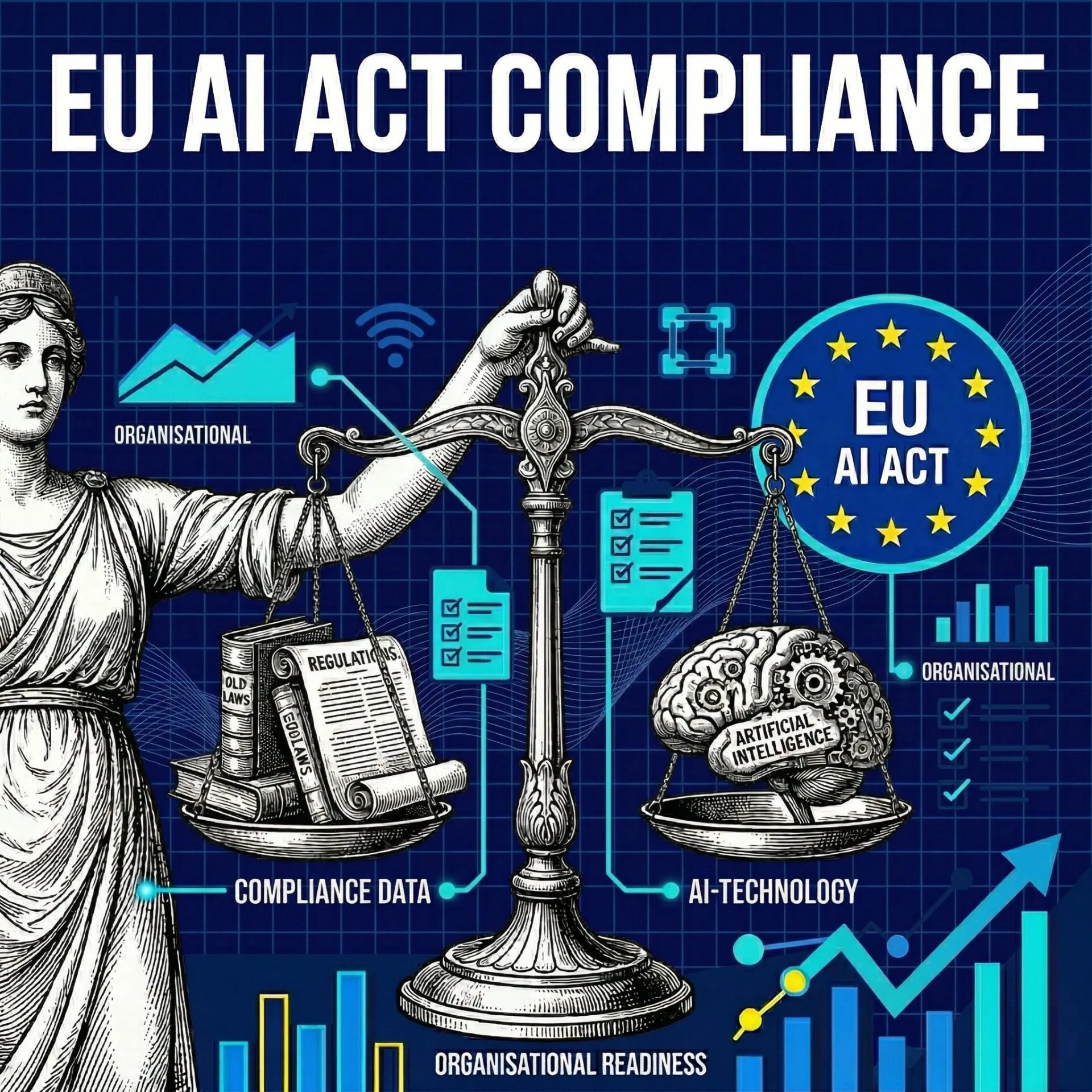
The EU AI Act is the first comprehensive legal framework on artificial intelligence worldwide, designed to ensure safe and trustworthy AI systems by 2026. This legislation aims to protect fundamental rights while fostering innovation across Europe. It introduces a risk-based approach, meaning the stricter the rules, the higher the potential risk of the AI application. Taking action now is urgent because early compliance protects your company from hefty fines and positions you as a trustworthy leader in your industry. You must act before it is too late.
Steps
Navigating the new European regulations might seem overwhelming, but achieving compliance boils down to a clear, actionable process. Whether your organization relies on minimal-risk tools or high-risk AI systems that require strict obligations like adequate risk mitigation and detailed documentation, taking a structured approach is essential. To help you transition smoothly and ensure your team uses AI responsibly and legally, we have broken down the compliance journey into four practical steps you can start implementing today.
Step 1: determine your AI risk category
You determine your AI risk category by evaluating if your system falls under unacceptable, high, transparency, or minimal risk levels. Unacceptable risk systems, like social scoring or harmful manipulation, are strictly banned. High-risk systems include AI used in recruitment, education, or critical infrastructure, which require rigorous compliance checks. The vast majority of business tools will fall into the transparency or minimal risk categories. You need to map exactly which categories apply to your daily operations.
Here are 3 actions to start your risk assessment:
- Audit all AI applications currently used by your team.
- Cross-reference your tools with the official high-risk categories.
- Document the purpose and potential impact of each system.
Step 2: assess your current tools and general-purpose models
Assessing your tools involves auditing all AI software in your company to check compliance with the new European standards. General-purpose AI models, which can perform a wide range of tasks, are becoming the foundation for many business systems. You must verify if the providers of these models comply with transparency and copyright rules. If you build upon these models, you share the responsibility of ensuring safe usage. Thorough documentation of your tech stack is non-negotiable for future audits.
Step 3: invest in AI literacy for your team
Investing in AI literacy means training your staff to understand, use, and monitor artificial intelligence effectively and ethically. Your team needs to know how to spot biases, protect user data, and align their workflows with GDPR. The fastest way to achieve this is by enrolling your staff in a structured AI Literacy & Compliance Certificate program. This ensures your workforce has the critical thinking skills required to operate safely.
Step 4: establish continuous human oversight
Establishing continuous human oversight requires assigning trained personnel to monitor high-risk AI applications and prevent automated errors. AI should never operate in a vacuum without human accountability. You need to design workflows where human experts can intervene, override, or shut down a system if it produces discriminatory or inaccurate results. Human-centric AI is the core philosophy of the new European framework.
Boost your team with Growth Tribe
Connect with our experts to accelerate your AI journey. Don’t figure this out alone. Join our new Skool community to learn alongside other pioneers. 👉 Join the tribe.
Want to go deeper? Explore the AI Literacy & Compliance Certificate and start building the skills that matter most: https://growthtribe.io/certificates/ai-literacy-compliance/.